
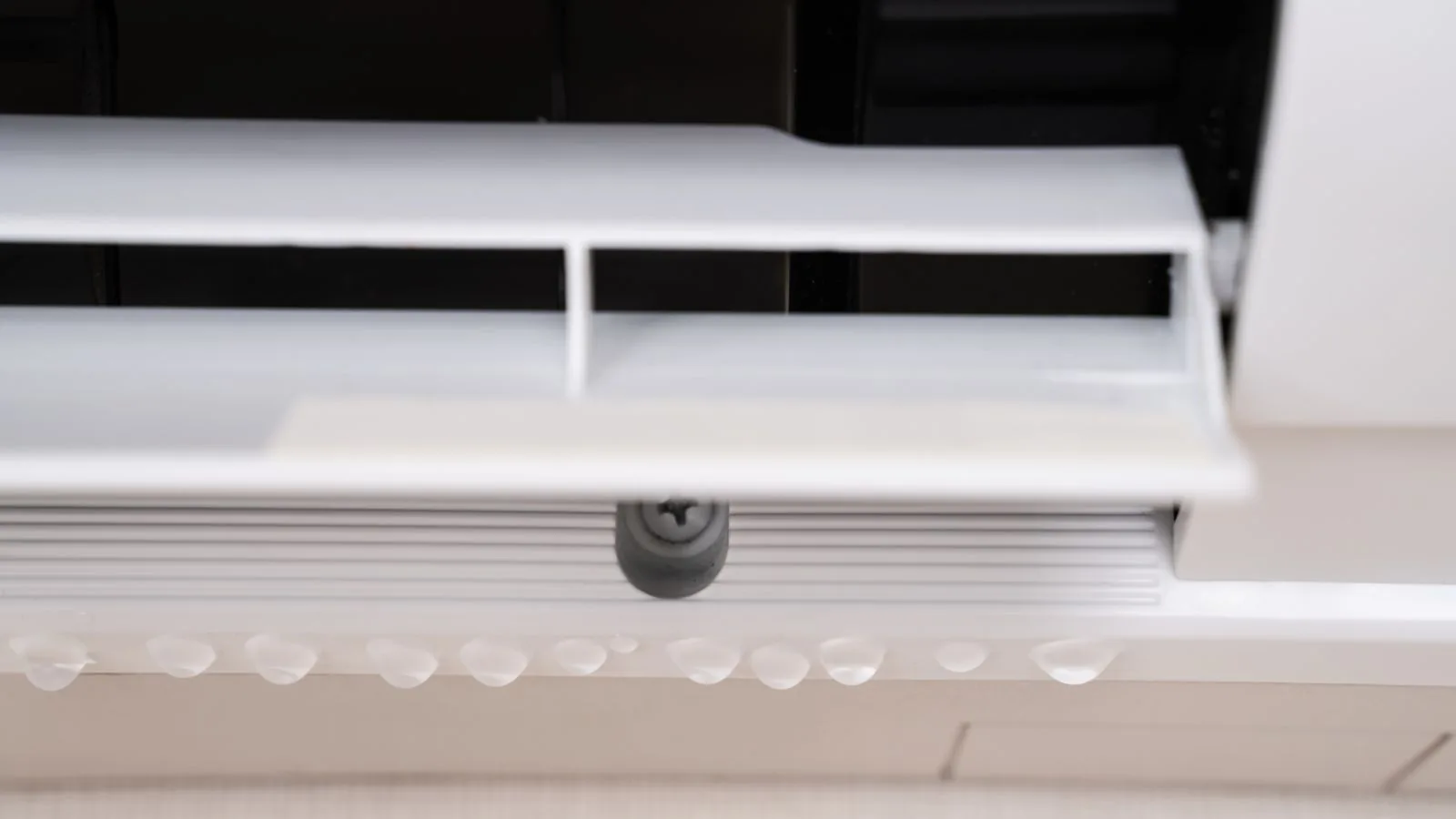
AC leak water damage repair is the cleanup and drying of water that came from an air conditioning or heat pump system, almost always from the condensate drain or the drain pan. Cooling air produces water as a byproduct, and when the drain line clogs, that water spills into the attic, closet or ceiling below.
The air conditioner itself is repaired by an HVAC technician. The restoration crew deals with what the water touched: insulation, drywall, flooring and framing. If a ceiling is already stained or sagging, see ceiling water damage repair for the drywall side.
How air conditioners leak
The coil inside an air handler cools air and pulls water out of it. That water drips into a pan and flows out a drain line. When algae, dust or debris clog the line, the pan overflows. Other causes include a cracked drain pan, a disconnected drain line, a dirty filter that freezes the coil, and low refrigerant that leads to ice and then melting.
- A clogged condensate line is the most common cause.
- A rusted or cracked drain pan can leak even when the line is clear.
- A frozen coil melts and overwhelms the pan.
- A poorly sloped line can hold water and overflow.
- A missing float switch means nothing shuts the system off when the pan fills.
Signs of an AC leak
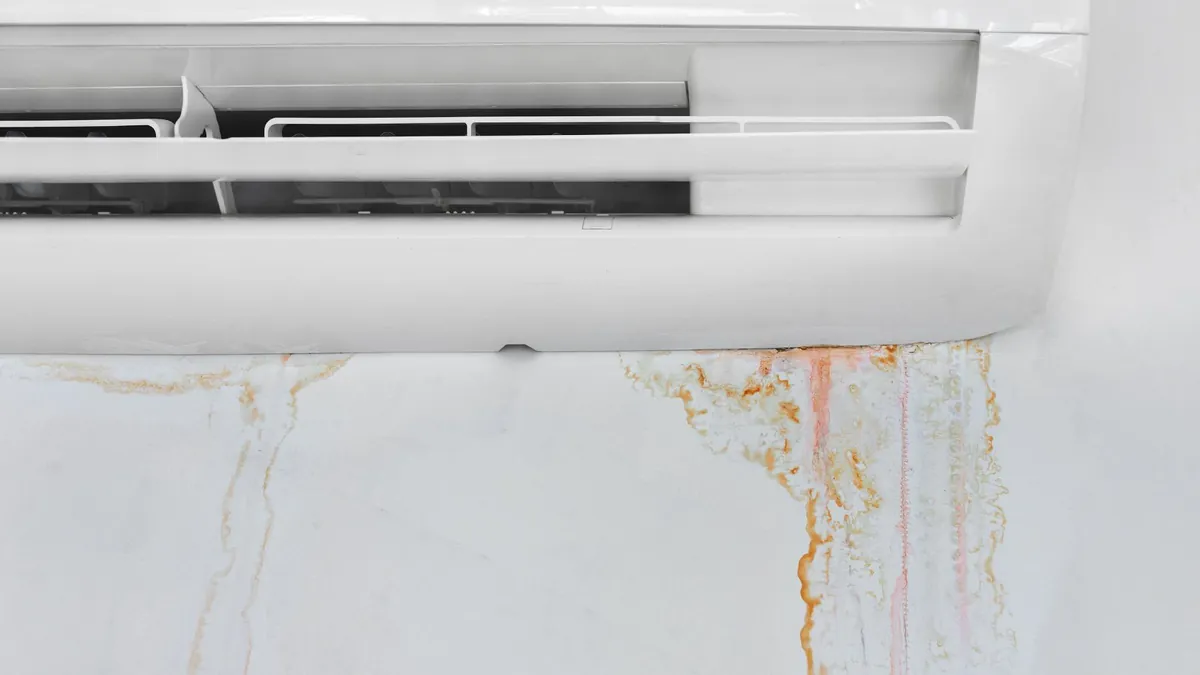
Look for water around the air handler, a stained or sagging ceiling under an attic unit, rust on the pan, a musty smell near the closet or an unexpected shutoff of the system. In an attic, water runs along framing and soaks insulation before it appears on a ceiling. The stain often shows up far from the unit.
Turn off the system at the thermostat and the breaker if you suspect an overflow, since running a unit that is leaking only adds water. Keep people away from any bulging ceiling.
What the cleanup involves
- Turn off the system and photograph the unit, pan and damaged areas.
- Remove standing water from the pan and the attic or closet floor.
- Remove wet insulation and any drywall that is saturated or sagging.
- Dry the framing and ceiling cavity with air movers and dehumidifiers.
- Check moisture readings in attic framing and the ceiling below.
- Rebuild the ceiling and insulation after an HVAC technician fixes the cause.
Condensate water is usually treated as Category 1 or Category 2, depending on what it picked up in the pan and the attic. Older, algae-filled drain water can be dirtier than it looks. Structural drying is the stage that makes sure the framing is dry before it is closed up.
Who fixes what
Water cleanup and AC repair are different jobs. The HVAC technician clears the line, replaces the pan or fixes the coil. The restoration crew handles the water damage. A common mistake is repairing the ceiling before the unit is fixed, which leads to a second stain. Ask the technician to install a float switch or a secondary pan so the system shuts off before water spills.
AC leaks in Hendersonville homes
Cooling systems run for much of the warm season, and a unit that is working hard produces a lot of condensate. If your air handler is in an attic or closet, check the drain line and pan at the start of the cooling season. Calls from ZIP 37075 and 37077 are handled by the same dispatch line, and the wall and drywall page covers the case where water reached a wall instead of a ceiling.
What to do before help arrives
- Turn the system off at the thermostat so it stops making condensate.
- If water is near the air handler or outlets and the panel is on dry ground, shut off power to that area.
- Set a bucket under drips and stay out from under any bulging ceiling.
- Do not run the unit again until the drain line has been cleared.
- Photograph the stains and the drain pan before anything is moved.
Industry standard
Professional drying work follows ANSI/IICRC S500, the standard for water damage restoration. After a condensate overflow, that means finding the full wet area with a moisture meter before any ceiling or wall is closed up again.
What affects the cost of AC leak repair
The AC repair and the water cleanup are priced separately. For cleanup, these factors matter.
| Cost factor | Why it changes the job |
|---|---|
| Time the unit leaked | A slow leak over a season soaks far more than one overflow. |
| Attic access | Tight attics slow insulation removal and drying. |
| Insulation type | Blown-in insulation is messier to remove than batts. |
| Ceiling damage | Drywall that sagged or stained must be replaced. |
| Drying time | Wood framing and drywall dry at different rates. |
| HVAC repair | The air conditioner repair is not part of the restoration scope. |
Tell the dispatcher which rooms are wet and for how long. You get the scope and price in plain words before any work begins.
Related guides
- Seasonal Water Damage Risks for Hendersonville, TN Homes
- Small Water Leak Insurance Claims in Hendersonville, TN
Questions about ac leak water damage in Hendersonville
Is an AC leak an emergency?
If the ceiling is bulging or water is still dripping, yes. Turn off the system and call. A small stain that is not growing can be scheduled, but it should not wait long.
Can I clear the drain line myself?
Many homeowners flush the line with vinegar, but a persistent clog or a leaking pan needs an HVAC technician.
Will insurance cover AC water damage?
Often when the failure was sudden, and less often when it came from long neglect. Check your policy and ask your insurer.
Why is my ceiling stain brown?
Brown rings usually come from dust and material in the water. They do not by themselves show mold, and health questions belong with a physician.