
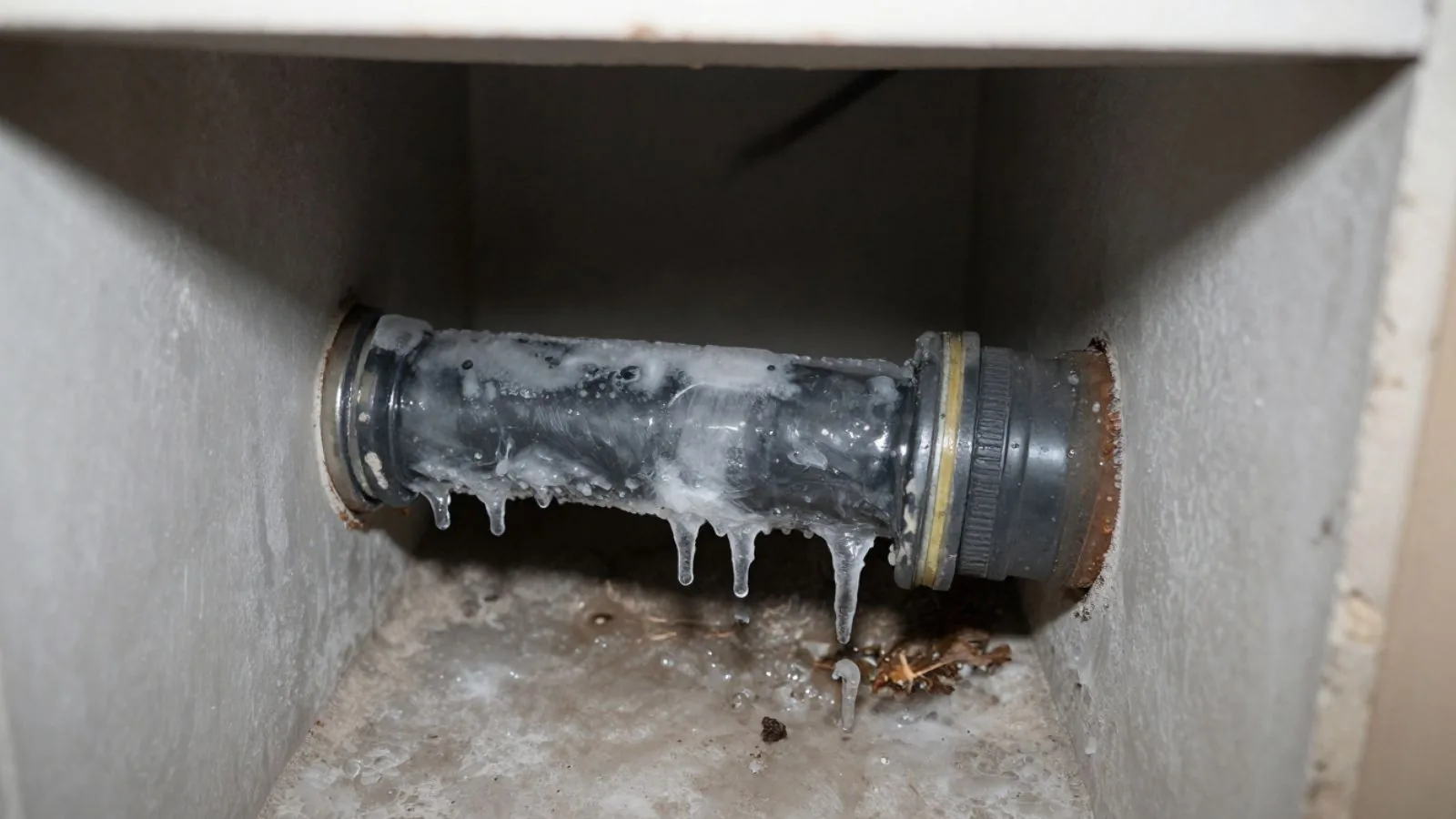
If a pipe has frozen, close the main water valve right away and call the 24/7 line. If it has already split or thawed and is leaking, the main shutoff is even more urgent. Open the faucets on the affected line, stay out of wet areas near outlets, and keep belongings off the floor until help arrives.
Frozen pipe water damage restoration is the cleanup and drying of water released when ice in a pipe splits the wall or a fitting and then thaws. The ice itself usually causes little damage. The damage comes as the pipe warms and water pours out of the split, often while no one is looking at it.
When a frozen pipe is an emergency
A pipe is an emergency when it stops delivering water in freezing weather, when it bulges or frosts, or when it begins leaking as the temperature rises. The most expensive floods happen when a pipe splits quietly overnight and thaws in the afternoon while the house is empty. Crews are sent the same day when available, and the line is staffed around the clock for after-hours calls.
Freezing weather does reach Middle Tennessee. The Tennessee Department of Commerce and Insurance published claim, safety and contractor guidance after Winter Storm Fern in January 2026. It noted that frozen pipe damage may not be covered when it results from negligence, such as not keeping the house at an adequate temperature when you could have.
- Close the main water shutoff and open faucets on the affected line.
- Do not use an open flame, torch or kerosene heater to thaw a pipe.
- If the pipe is not split, thaw it slowly with a hair dryer or a heating pad from the faucet end toward the frozen section.
- If water is leaking, leave the pipe alone and call, since heat may speed the release.
- Shut off power to wet areas only when the panel is on dry ground and you can reach it safely.
- Photograph the pipe, the split and the damage before cleanup.
Do not thaw a pipe near water and wiring
Heat sources near wet walls and wiring create fire and shock risks. If the pipe is in a wall, leave it to professionals and shut the water off.
Where pipes freeze
Pipes freeze where cold air reaches them: exterior walls, unheated crawl spaces and attics, garages, and lines near vents. Hose bibs that stay connected in winter are a common weak point because the freezing water in the hose pushes back into the pipe. Pipes in a heated interior wall are less at risk, but the risk rises with severe cold and poor insulation.
How often this happens in your neighborhood is a weather question. The National Weather Service Nashville office publishes local climate data if you want freeze-day numbers for your location.
What the cleanup involves
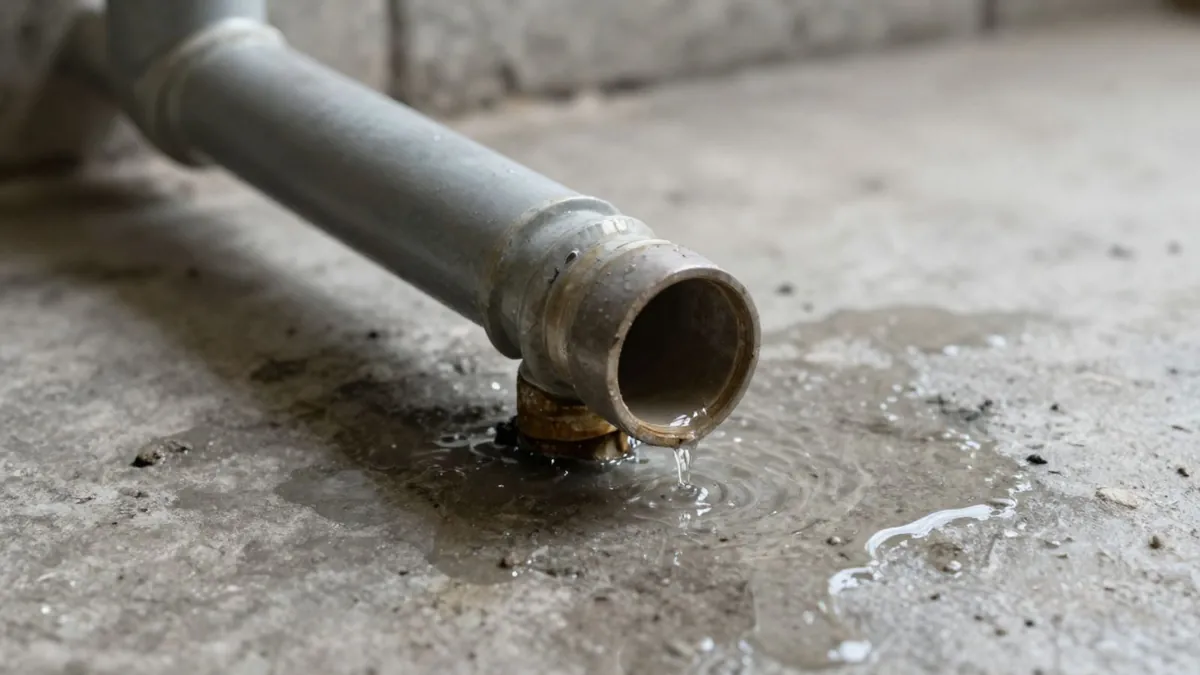
The water released by a split pipe is usually clean at first and treated as Category 1. It can move across several rooms before it is discovered, and the stage of the work is the same as for a burst pipe. The restoration crew handles the water, and a plumber repairs the line.
- Water extraction from floors and carpet.
- Opening wet walls and ceilings to dry insulation and framing.
- Moisture mapping to find water that traveled inside cavities.
- Structural drying with air movers and dehumidifiers.
- Photos and moisture logs for the insurance claim.
- A rebuild scope for drywall, flooring and paint.
Prevention before the next freeze
Disconnect and drain garden hoses and close the interior shutoff to outdoor spigots. Keep the thermostat at a steady setting and open cabinet doors on exterior walls so warm air reaches the pipes. Insulate exposed lines in crawl spaces and attics. If you leave for several days in cold weather, shut off the main valve and drain the lines. Let a faucet drip only if the plumber recommends it for your system.
Local notes and coverage
Ask the city Building and Codes office about permits for any pipe replacement beyond a simple repair. The city has adopted the 2021 International Plumbing Code with amendments. Dispatch covers ZIP 37075 and 37077, and the crew can document everything for your insurer.
Industry standard
Industry standards such as ANSI/IICRC S500 guide the drying stage after a thaw, including how the water is classified and how drying progress is recorded.
What affects the cost of frozen pipe cleanup
Thaw floods can be small or very large, depending on how long the water ran before anyone noticed.
| Cost factor | Why it changes the job |
|---|---|
| Duration of the leak | Hours of unnoticed flow soak far more than a leak caught in minutes. |
| Floors reached | Water that dropped through a ceiling adds drywall and insulation work. |
| Location of the split | Pipes in walls require opening walls. |
| Materials | Hardwood, carpet and drywall each have different save limits. |
| Drying time | Cold weather slows drying and often needs more heat and dehumidification. |
| Rebuild | Repairs after drying are separate from mitigation. |
Describe the damage on the phone and the dispatcher explains the likely scope and price before any work starts.
Related guides
- How to Shut Off Your Water Main in Hendersonville, TN
- Seasonal Water Damage Risks for Hendersonville, TN Homes
Questions about frozen pipe water damage in Hendersonville
Do you handle frozen pipe emergencies at night or on weekends in Hendersonville?
Yes. Dispatch is answered 24/7, including cold nights and holidays. Same-day response is offered when crews are available.
Is it safe to thaw a frozen pipe myself?
An unsplit pipe in an open area can be thawed slowly with a hair dryer or heating pad. Never use a torch or open flame, and call a professional if the pipe is in a wall.
Does insurance cover frozen pipes?
Often when the damage is sudden, but the Tennessee Department of Commerce and Insurance notes it may not be when it results from negligence such as not heating the home. Check your policy.
How do I know if a pipe split?
You may see water, wet drywall, or a bulge. A drop in water pressure or a hissing sound may be a clue, and a moisture meter can confirm hidden leaks.