
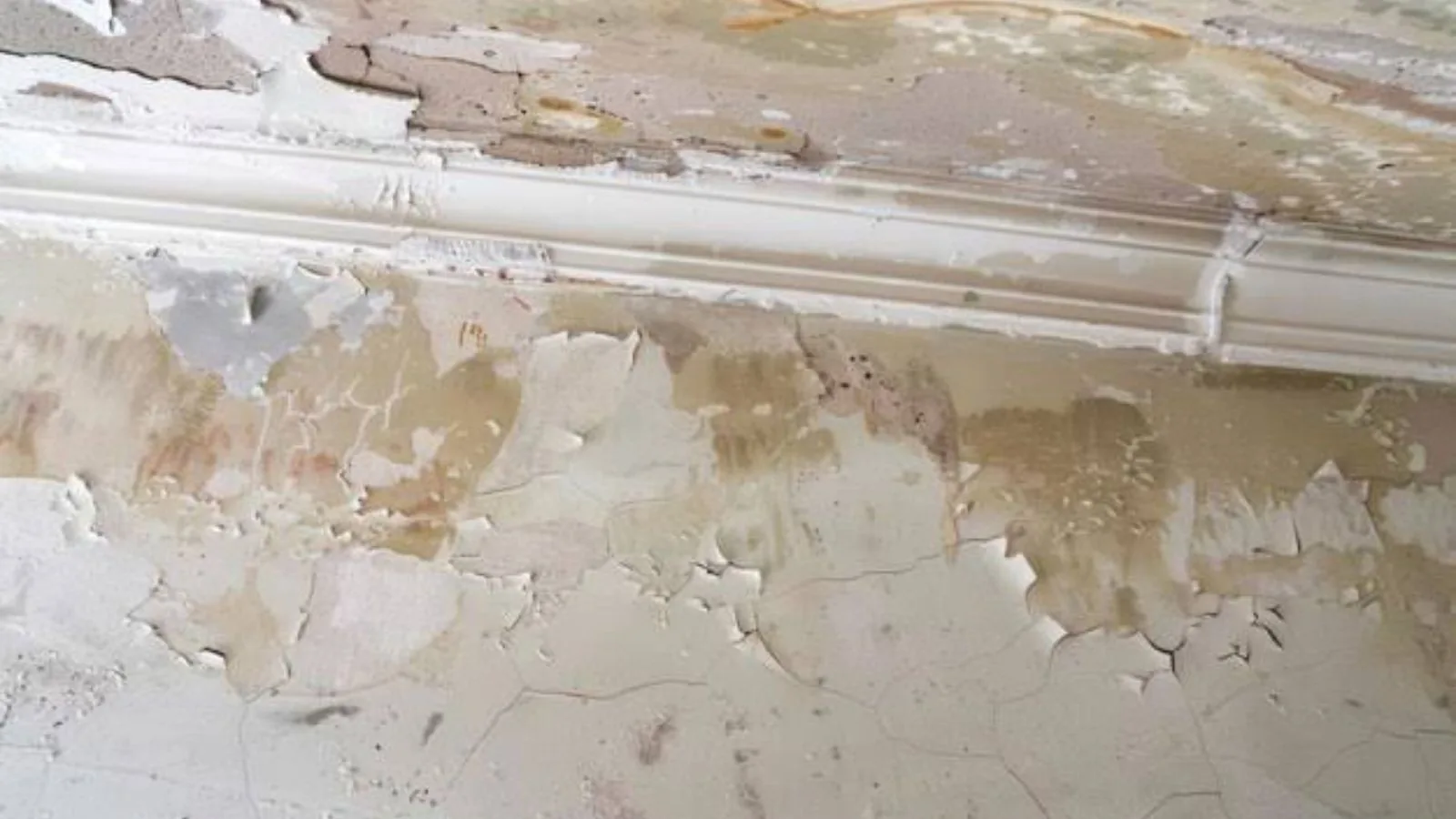
Wall and drywall water damage repair is the drying, cutting and rebuilding of wall surfaces that absorbed water from a leak, a flood or a spill. Drywall is gypsum between paper facing, and it weakens when wet. It can also hide wet insulation and framing behind it.
This page covers the wall itself. The source of the water decides the rest. A pipe failure sits on the burst pipe page, and water that reached the wall from a ceiling is on the ceiling page.
Signs of water in a wall
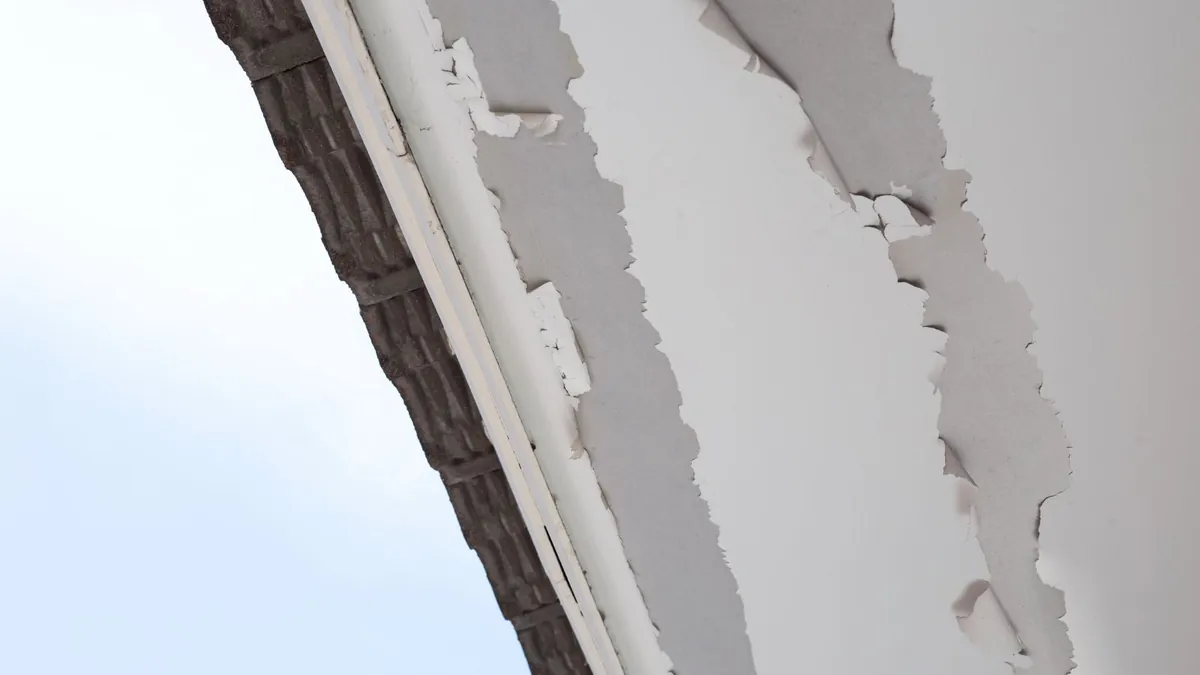
The visible stain is often only a fraction of the wet area. Water wicks upward in drywall, so a wet bottom edge can climb well above the water line. Signs include bubbling paint, brown rings, soft or crumbling drywall, swollen baseboards, peeling wallpaper, and a musty odor.
- Paint or wallpaper that bubbles, peels or stains.
- Drywall that feels soft or crumbles at the base.
- Baseboards that swell, warp or pull away.
- A damp, cold feel to part of the wall.
- Dark rings at the edges of a stain, which mark where water stopped.
- Nail pops and cracking at seams.
When drywall can be dried and when it must go
Clean water caught quickly may allow drywall to be dried in place. Drywall that stayed wet for more than a day or two, crumbles, has bulged, or was soaked by contaminated water is usually removed. Insulation behind it is often replaced, since many types hold water.
| Condition | Usual result | Reason |
|---|---|---|
| Clean water, fresh, intact surface | Dried in place | Gypsum can dry without breaking down |
| Clean water, 2 or more days wet | Often cut out | Paper facing and core weaken |
| Bulging or crumbling board | Removed | Structure has failed |
| Flood or sewage water | Removed | Porous and cannot be disinfected |
How wall repair works
The crew finds the full wet area before cutting. Moisture mapping shows how high the water climbed, and thermal imaging helps trace it behind the surface.
- Locate the source and photograph the wall, baseboard and floor.
- Remove baseboards to see the bottom plate and expose the wall cavity.
- Make a flood cut, a straight cut about 2 feet or more above the water line, when drywall must go.
- Remove wet insulation and dry the studs and cavity with injection drying, air movers and dehumidifiers.
- Confirm dry moisture readings with a meter before closing the wall.
- Hang, tape, texture, prime and paint, and reinstall baseboards.
The drying stage follows structural drying methods. Painting too early traps moisture behind the finish and often leads to peeling.
Walls near floors and cabinets
Water often reaches the bottom of a wall first, from a floor leak or a flood. If the floor is wood or laminate, see hardwood floor repair. If the wall backs onto a sink or dishwasher, the kitchen page covers cabinets and plumbing. Where water came from above, the wall may be wet from the top down, which makes insulation inspection more important.
Finish work and matching
Replacing drywall is straightforward, but matching texture and paint takes care. Many repairs include repainting a whole wall to avoid visible patches. Ask the crew how far the scope goes, and compare it to what your insurer will cover.
In Hendersonville, ask the city Building and Codes office whether a repair needs a permit, since rules vary by scope. Calls from ZIP 37075 and 37077 reach the same dispatch line.
What to do before help arrives
- Shut off power to the room if outlets or switches are wet.
- Do not drill, cut or paint over a wet wall.
- Stay clear of walls that bulge or sag.
- Pull furniture away from the wall and open nearby doors for air.
- Photograph the stains and mark their edges lightly in pencil to see if they spread.
Industry standard
ANSI/IICRC S500 is the standard professionals use for drying and for deciding what to remove. For walls, that decision rests on moisture readings in the drywall, insulation and framing.
What affects the cost of wall and drywall repair
Wall repair ranges from drying a small section to replacing whole rooms. The key factors are listed below.
| Cost factor | Why it changes the job |
|---|---|
| Wet area | The height and width of wet drywall set the cut and replace scope. |
| Time wet | Longer exposure weakens drywall and raises the chance it must be removed. |
| Insulation | Wet insulation is removed and replaced. |
| Finish | Texture, paint and trim matching add labor. |
| Drying time | Wall cavities dry more slowly than open surfaces. |
| Source repair | The plumbing or roof repair is separate. |
Tell the dispatcher which rooms are wet and for how long. You get the scope and price in plain words before any work begins.
Related guides
- Check a Hendersonville, TN Home for Water Damage Before Buying
- Water Damage Drying Time in Hendersonville, TN Homes
Questions about wall and drywall water damage in Hendersonville
Can I just paint over a water stain on drywall?
Only if the wall is dry and the source is fixed. Stain-blocking primer helps, but painting over wet drywall can trap moisture and lead to peeling.
How high does water climb in a wall?
Drywall wicks water upward, often several inches above the water line, and insulation can carry it higher. Moisture readings find the true limit.
Do I need to remove baseboards?
Usually yes. Removing them lets the crew see and dry the bottom of the wall, which is where water collects.
Will insulation have to be replaced?
Often. Many types of insulation hold water and dry slowly, and wet insulation can keep drywall damp.