
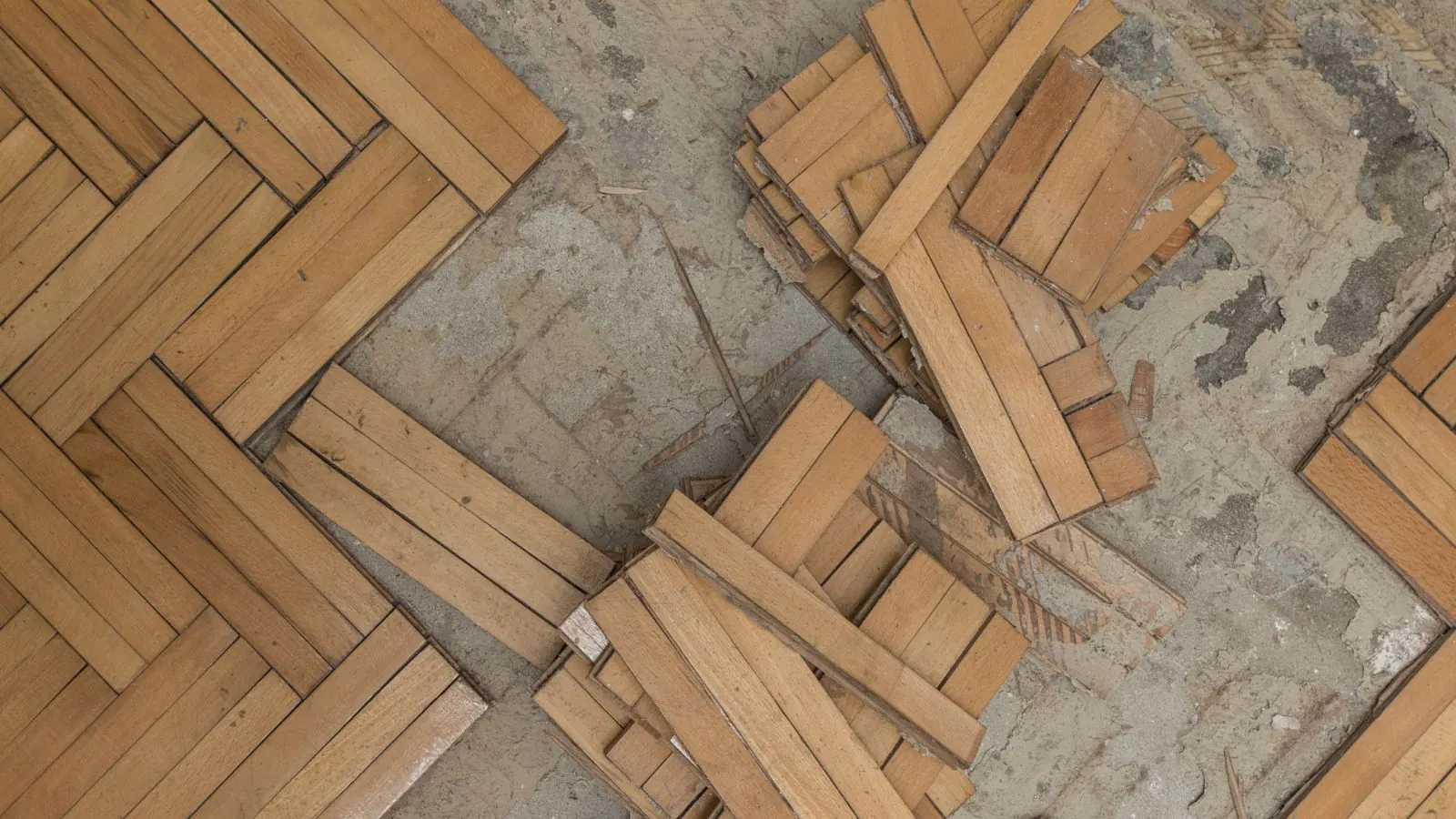
Hardwood floor water damage repair covers wood, engineered wood and laminate floors that have absorbed water from a leak, overflow or flood. Wood swells as it absorbs moisture, which shows up as cupping, crowning, gaps or buckling. Drying fast can save the boards, while waiting often means replacement.
The job is separate from carpet work and wall repair. The material, the finish and the subfloor underneath all set what can be done, and each is dealt with on its own steps.
Signs of water damage in a wood floor
Wood reacts to moisture over hours and days, not instantly, so the damage you see today may not be the damage tomorrow. Common signs follow a pattern.
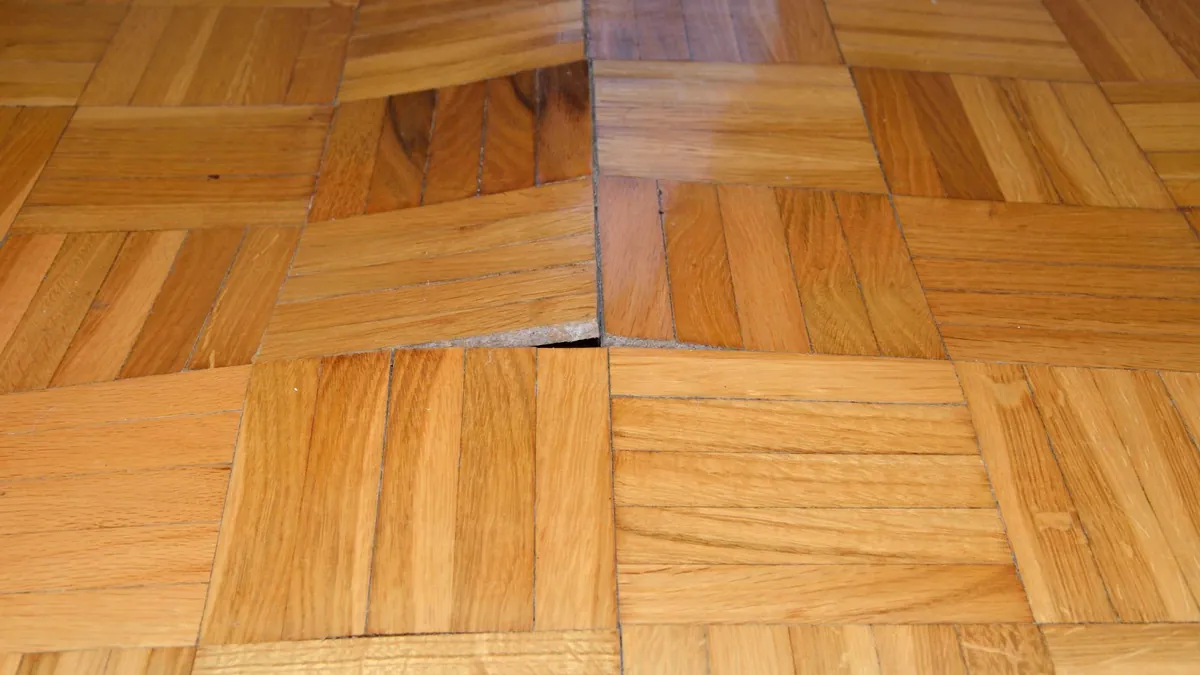
- Cupping, where board edges rise higher than the center.
- Crowning, where the center rises, often after a floor is sanded while still wet.
- Buckling, where boards lift off the subfloor.
- Gaps between boards after the wood shrinks again.
- Dark stains or black spots at seams, which suggest long exposure.
- A musty smell from beneath the floor.
Solid, engineered and laminate floors
Solid hardwood is a single piece of wood and can usually be dried and refinished if the water was clean and caught fast. Engineered wood has a plywood core and a thin wood veneer, which makes it more stable but harder to refinish after a deep soak. Laminate has a fiberboard core that swells and does not recover, so wet laminate is usually replaced.
| Floor type | Reaction to water | Usual outcome |
|---|---|---|
| Solid hardwood | Swells and cups, may recover | Dried and often refinished if caught early |
| Engineered wood | Veneer lifts, core may swell | Dried if mild, replaced if layers separate |
| Laminate | Core swells and does not recover | Usually replaced |
| Parquet | Pieces lift and come loose individually | Pieces re-glued or replaced after drying |
How wood floors are dried
Drying wood is slower than drying carpet. The goal is to bring the boards and subfloor down to a stable moisture reading without cracking the wood.
- Extract surface water and photograph the floor.
- Check moisture in boards, subfloor and walls with a pin or pinless meter.
- Place drying mats or panels that pull moisture out through the floor surface, along with air movers and dehumidifiers.
- Remove baseboards or drill small holes at the edges if needed to dry the space beneath.
- Monitor until readings match a dry reference. Wait for the floor to settle before sanding.
- Sand, refinish or replace boards after the floor has stabilized.
Floors usually need structural drying along with the surface work, because the subfloor and wall bottoms are wet too.
When wood floors should be replaced
Replace boards that have crumbled, split along the grain, grown mold on the underside or stayed wet for long enough that they do not return to flat. Dirty water, such as sewage, makes replacement the safe choice. A floor that is dried too fast can crack, so a slow and measured approach is better than a rushed one.
Water often reaches wood floors from kitchens and appliances. If the leak started at a sink or dishwasher, see kitchen water damage and appliance leak cleanup. If the wet floor sits over a crawl space, the crawl space page explains what happens underneath.
Hardwood in Hendersonville homes
Hardwood and laminate are common finishes in homes everywhere, and the same drying steps apply in Hendersonville. If you are not sure what your floor is, look at a board edge at a vent or doorway. Ask your insurer how your policy treats the water source, and call the 24/7 line from ZIP 37075 or 37077 with photos ready.
What to do before help arrives
- Lift rugs, furniture and anything else sitting on the wet floor.
- Do not apply heat, run a sander or seal the floor, which can trap moisture.
- Keep foot traffic off cupped or soft areas.
- Mop up standing water with towels and keep the room ventilated.
- Photograph the floor from several angles before work begins.
One-story layouts spread a leak across the whole main level. The Walton Ferry Peninsula page covers that case.
Industry standard
ANSI/IICRC S500 is the standard professionals use to set drying goals. For wood floors, those goals rest on moisture readings in the boards and subfloor, not on how the surface looks.
What affects the cost of hardwood floor repair
Wood floor work ranges from drying alone to full replacement. The factors below shape most of the difference.
| Cost factor | Why it changes the job |
|---|---|
| Floor type | Solid, engineered and laminate floors have different save limits. |
| Time wet | Longer exposure increases swelling and the chance of replacement. |
| Area | More square footage means more drying panels, equipment and refinishing. |
| Subfloor | Wet plywood or a wet slab must dry before work can continue. |
| Finish work | Sanding, staining and sealing are separate steps after drying. |
| Matching | Replacing boards may require blending with existing wood. |
Call and describe what happened. The dispatcher lays out the likely scope and the price drivers before anyone starts work.
Related guides
- Water Damage Drying Time in Hendersonville, TN Homes
- Water Damage Restoration Cost in Hendersonville, TN
Questions about hardwood floor water damage in Hendersonville
How fast should I call after a wood floor gets wet?
As soon as you can, ideally the same day. Wood begins to swell within hours, and early drying gives the best chance to avoid replacement.
Will cupped boards flatten again?
Often, if the cause is removed and the floor dries slowly and evenly. Some boards stay deformed and need sanding or replacement.
Can I sand the floor right away?
No. Sanding a floor before it is fully dry can lock in cupping and cause crowning. Wait for the readings to stabilize.
Is laminate worth drying?
Usually not, because the fiberboard core swells and does not recover. Laminate that was only splashed and dried within hours may be fine, but a soaked floor is normally replaced.