
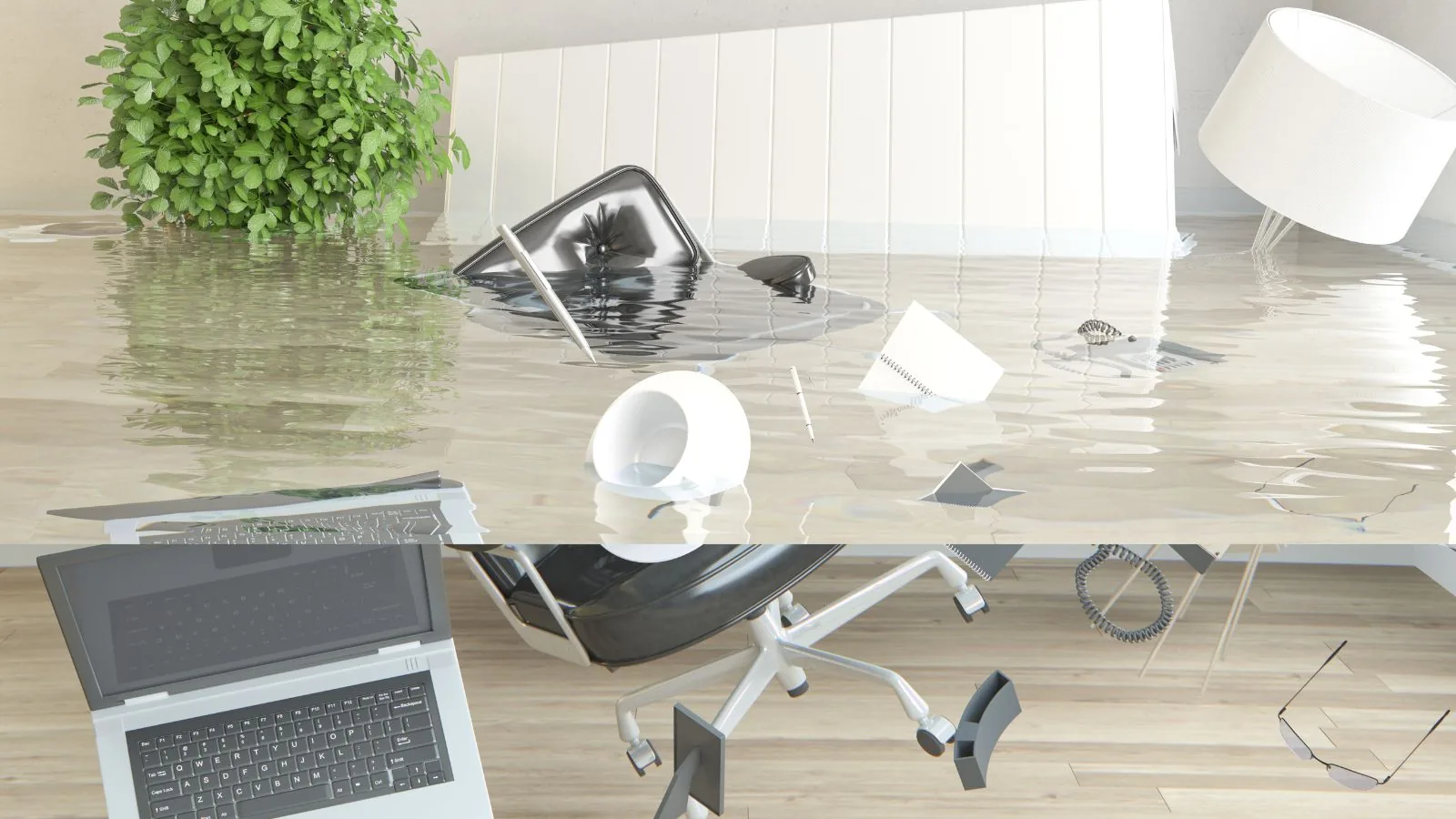
A water loss in a business is urgent from the first hour because every day of downtime costs money. Call the 24/7 line, shut off the water main if you know where it is, cut power to wet areas only when it is safe, and move inventory and electronics off the floor while you wait.
Commercial water damage restoration is the extraction, drying and cleanup of offices, retail units, restaurants, medical suites and multi-unit buildings. It differs from home restoration in scale, in the number of people with a stake in the loss, and in the paperwork. Owners, tenants, property managers and insurers often all need documentation.
When a business water loss is an emergency
A loss is an emergency when water is spreading between tenant spaces, when it reaches electrical equipment or a server room, or when it touches stock that cannot be replaced. Water that travels through a ceiling into the unit below can double the size of the claim in a day. Same-day response is offered when crews are available, and after-hours calls are handled like any other call.
Mixed-use districts show the problem well. The Streets of Indian Lake on Indian Lake Boulevard, for example, combines retail, a cinema, residences and medical offices in one district, which is the kind of layout where a single failed line can reach several occupants.
Protect people and records first
Keep staff and customers out of wet areas. Do not run computers, registers or refrigeration plugged into wet outlets. Photograph the scene and keep a list of damaged stock before anything is thrown away.
How a commercial job differs from a home
Commercial jobs are managed around the business. The crew sets a scope that separates the emergency work from the rebuild, works in phases when part of the building must stay open, and keeps moisture logs that a property manager or adjuster can read.
- Phased drying so one tenant space can reopen before another.
- Containment barriers and air scrubbers where dust or odors would reach open areas.
- Contents handling for inventory, files and office equipment, including pack-out where needed.
- Daily moisture readings and notes that match the documentation an insurer will ask for.
- Separate reporting for landlord and tenant when both carry policies.
Common sources in commercial buildings
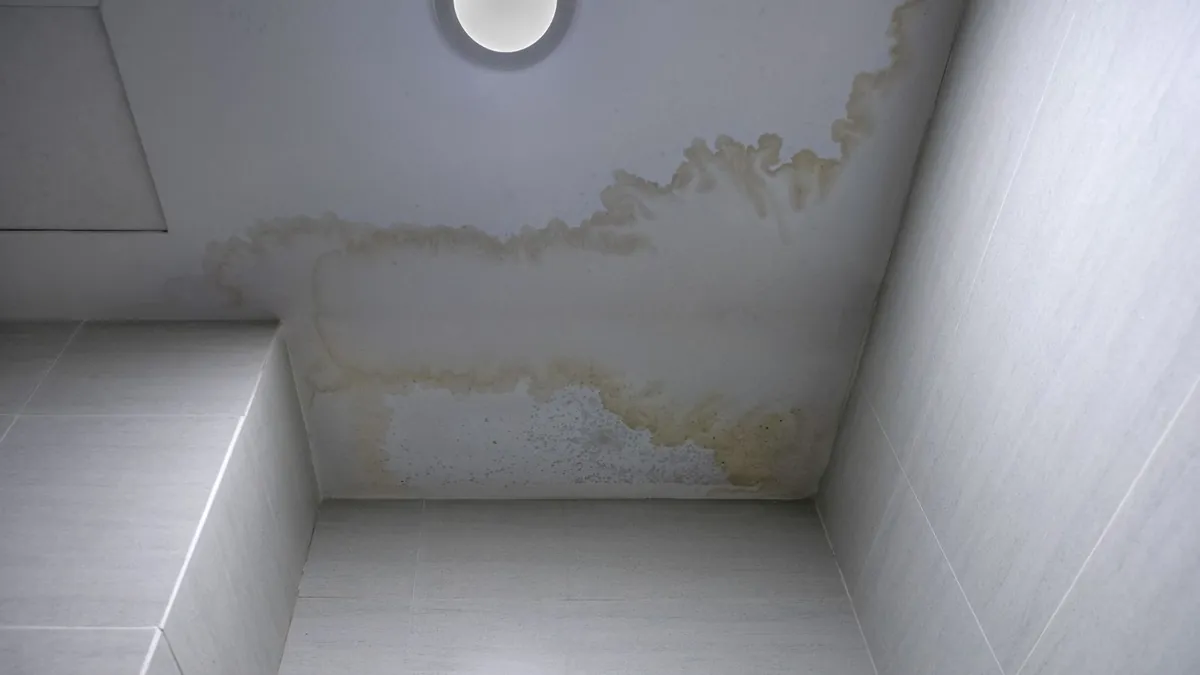
Sprinkler line failures, burst supply lines above ceilings, roof drain backups, water heaters in utility rooms and restroom fixtures are the usual starting points. Kitchens add grease and floor drain issues, and multi-unit buildings add upstairs-to-downstairs travel.
Ceiling tiles and insulation absorb water quickly, which means the ceiling repair side of the job often starts the same day. Standing water is handled by water extraction, and wet walls and slabs follow the structural drying process.
Working with property managers and insurers
Commercial policies differ widely. Some cover business interruption, some require specific mitigation steps, and many have separate deductibles for water. The dispatcher will not tell you what your policy covers, but the crew can supply photos, scope notes and moisture logs for you to share with your carrier. Keep every invoice for emergency work.
For multi-unit buildings, tell the dispatcher how many units are affected and who holds the keys. Access problems cause more delay than equipment problems.
Coverage across Hendersonville
Dispatch covers commercial properties in ZIP 37075 and 37077, along SR 386 and US 31E, and in nearby Old Hickory, Madison, Goodlettsville and Gallatin. Residential owners with a rental or an office in a home can also use this line, but the extraction page may be the closer fit for a single-family loss.
What to do before help arrives
- Move people out of affected areas if water is near electrical equipment or may be contaminated.
- Close the water supply at the suite or building valve, and notify building management.
- Protect inventory, records and equipment by lifting them off wet floors.
- Photograph the damage and note the time you found it.
- Keep a log of who was called and when, which helps any later claim.
Industry standard
Commercial crews commonly work to ANSI/IICRC S500, so it is fair to ask for the standard by name when you compare bids. A scope that cites it should still list rooms, equipment and drying days in plain terms.
What affects the cost of commercial water damage work
Commercial pricing follows the same drivers as residential work, multiplied by building size and complexity. A scope with itemized line items lets owners and tenants compare it with an insurance estimate.
| Cost factor | Why it changes the job |
|---|---|
| Building size and layout | More rooms, floors and tenants mean more equipment, labor and documentation. |
| Water category | Clean supply lines are simpler than drain backups or flood water. |
| Materials involved | Ceiling tile, carpet tile, drywall, concrete and fixtures each dry differently. |
| Business hours and phasing | Work around open hours or night shifts can change staffing. |
| Contents and equipment | Inventory, files and electronics can add pack-out and cleaning work. |
| Rebuild scope | Repairs after drying are priced separately from the mitigation. |
Tell the dispatcher which rooms are wet and for how long. You get the scope and price in plain words before any work begins.
Related guides
- Water Damage Restoration Cost in Hendersonville, TN
- How to Choose a Water Damage Company in Hendersonville, TN
Questions about commercial water damage in Hendersonville
Do you handle commercial water damage emergencies at night or on weekends in Hendersonville?
Yes. Dispatch answers 24/7. Same-day response is offered when crews are available, and the dispatcher will ask about the building, tenants and any equipment at risk.
Can you work while the business stays open?
Often, in phases. Containment barriers and targeted drying can keep part of the space usable, depending on the damage and the layout. The crew will explain what is realistic before work begins.
Who pays, the landlord or the tenant?
That depends on the lease and each party's policy. The crew documents the loss so both sides have records, but lease and coverage questions go to the landlord, tenant and insurers.
Do you handle multi-unit buildings?
Yes. Tell the dispatcher how many units are affected, where the water started and who can provide access. Water travel between units is a common reason these jobs grow.