
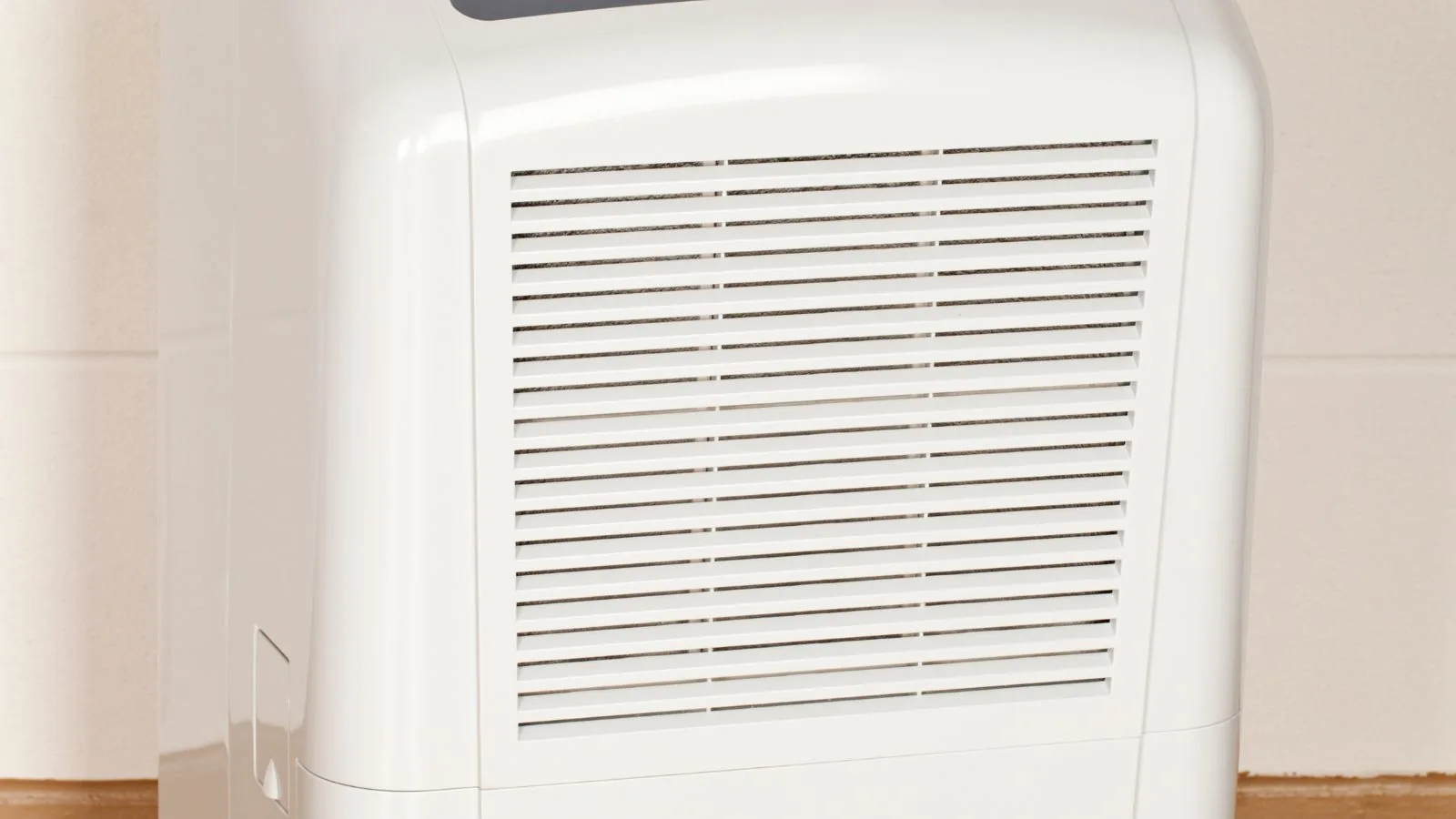
Structural drying and dehumidification is the controlled removal of moisture from framing, subfloor, drywall and contents after water damage. It uses moisture meters, air movers and dehumidifiers to bring materials back to a dry standard, which is the only reliable way to avoid rot and mold after a leak.
This page is where the term water mitigation lives on this site. Mitigation is the whole set of steps that limit damage, including drying. If you need a plain explanation of what the crew sets up and why, read on.
My walls feel damp and the carpet is still wet. What now?
If you are searching because a wall feels cool and damp, a floor squishes, baseboards are swelling or the house smells musty a day or two after a leak, the answer is structural drying. Surface wiping and a fan on the floor do not dry what is inside the wall. The moisture is in the framing, insulation and the back of the drywall.
Structural drying is the trade name for what fixes it, and the sooner it starts, the more of the building can be saved.
What moisture mapping shows
Drying starts with a map. The crew scans walls and floors with a moisture meter, checks suspect areas with a thermal camera, and records readings on a sketch of the rooms. That map shows where water traveled, which is often well beyond the visible stain.
Readings are repeated every visit. A job is finished when the numbers on affected materials match a dry reference reading taken in an unaffected part of the house, not when the room feels dry.
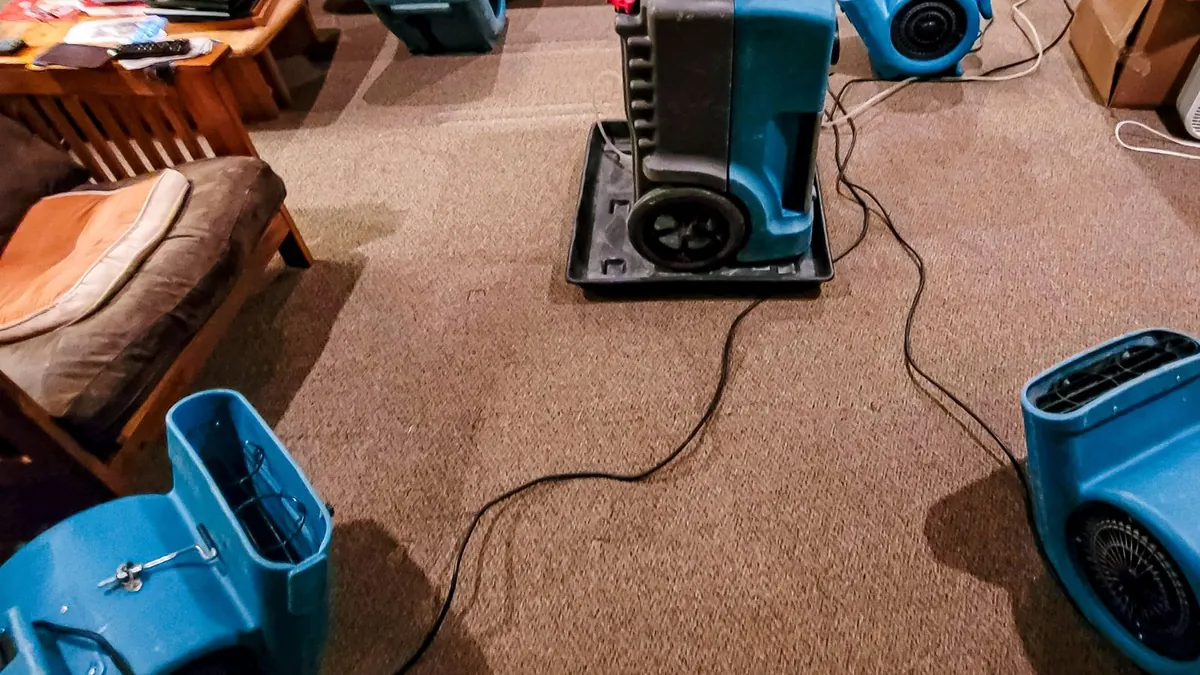
Equipment and how it works
Drying is a balance of moving air, warming it and removing humidity. Each tool has a job.
| Equipment | What it does | Where it is used |
|---|---|---|
| Air movers | Push air across wet surfaces to lift moisture into the room | Floors, walls, carpet and ceilings |
| LGR dehumidifiers | Pull water vapor out of the air so it can absorb more moisture | Most residential rooms |
| Desiccant dehumidifiers | Dry very cool or very low-humidity spaces | Crawl spaces and basements in cool weather |
| Injection drying systems | Push dry air into wall cavities through small holes | Wall cavities and under cabinets |
| Moisture meters and thermal camera | Measure and track progress | Every visit |
Equipment placement is calculated from the size of the room and the amount of wet material, not guessed. Too few air movers slow the job and too many waste power.
How long does drying take?
Many jobs take several days, and some take longer. The time depends on the materials, the temperature, the humidity in the house and how deep the water went. Concrete and thick wood dry slowly. Drywall and carpet dry faster. There is no honest fixed number before the readings start.
The crew visits to check progress and adjust equipment. If a wall is not responding, the plan may change to opening it for access. Ask the crew to show you the readings.
What drying can and cannot save
Drying saves material that was wet with clean water and treated quickly. It cannot save material soaked with contaminated water, drywall that has crumbled or carpet pad that has held water for days. Those are removed first, and then the structure around them is dried.
Drying also pairs with other pages on this site. After a burst pipe or a flood, drying is the longest stage. For wet floors, see hardwood floor repair and carpet restoration.
Humidity, mold and why timing matters
Wet materials can support mold growth if they stay damp, and the exact timing depends on temperature, material and humidity. Mold is covered on the mold remediation page, and health questions belong with a physician. The practical point here is that drying quickly and documenting readings is the best defense.
Drying also protects the insurance file. Moisture logs show what was wet, what the crew did and when the structure reached a dry standard.
Drying in Hendersonville homes
In a humid season, dehumidifiers do more of the work, because air that is already moist cannot absorb water from materials. Equipment is sized to the actual conditions in the house. Calls from ZIP 37075 and 37077 are handled by the same dispatch line, and drying visits are scheduled around the equipment checks.
What to do while the equipment runs
- Leave air movers and dehumidifiers running until the crew says otherwise.
- Keep outside doors and windows closed in the drying area.
- Keep cords clear of walkways and away from any standing water.
- Keep the thermostat steady so dehumidifiers work well.
- Report new stains, odors or damp spots to the crew right away.
What affects the cost of structural drying
Drying is priced by the equipment and the days needed, which depend on the job. A moisture map lets the crew give a better idea.
| Cost factor | Why it changes the job |
|---|---|
| Wet area | More square footage means more equipment. |
| Materials | Concrete, framing, hardwood and insulation have different drying rates. |
| Days on site | Equipment runs until readings reach the dry standard. |
| Monitoring visits | Each visit includes readings and equipment adjustments. |
| Access work | Opening walls, lifting baseboards or drilling cavities adds time. |
| Rebuild | Replacing materials that cannot be dried is a separate scope. |
Tell the dispatcher which rooms are wet and for how long. You get the scope and price in plain words before any work begins.
Related guides
- Water Damage Drying Time in Hendersonville, TN Homes
- What Is Water Mitigation? A Hendersonville, TN Guide
Questions about structural drying in Hendersonville
How do I know the structure is actually dry?
Moisture readings on affected materials should match a dry reference reading from an unaffected part of the house. Ask the crew to share the log from each visit.
Can I dry a wet wall with fans and a household dehumidifier?
For a very small, clean-water spill caught fast, maybe. For anything inside a wall cavity or under a floor, household equipment rarely reaches the moisture, which is why professional readings matter.
How long will the equipment run in my house?
It depends on the materials and conditions. Many jobs take several days, and the crew will check readings and adjust the plan. Equipment stays until the readings are dry.
What is the difference between drying and water mitigation?
Mitigation is the full set of steps that limit damage, such as stopping the source, removing water, removing wet materials and drying. Structural drying is one part of it, and usually the longest.