
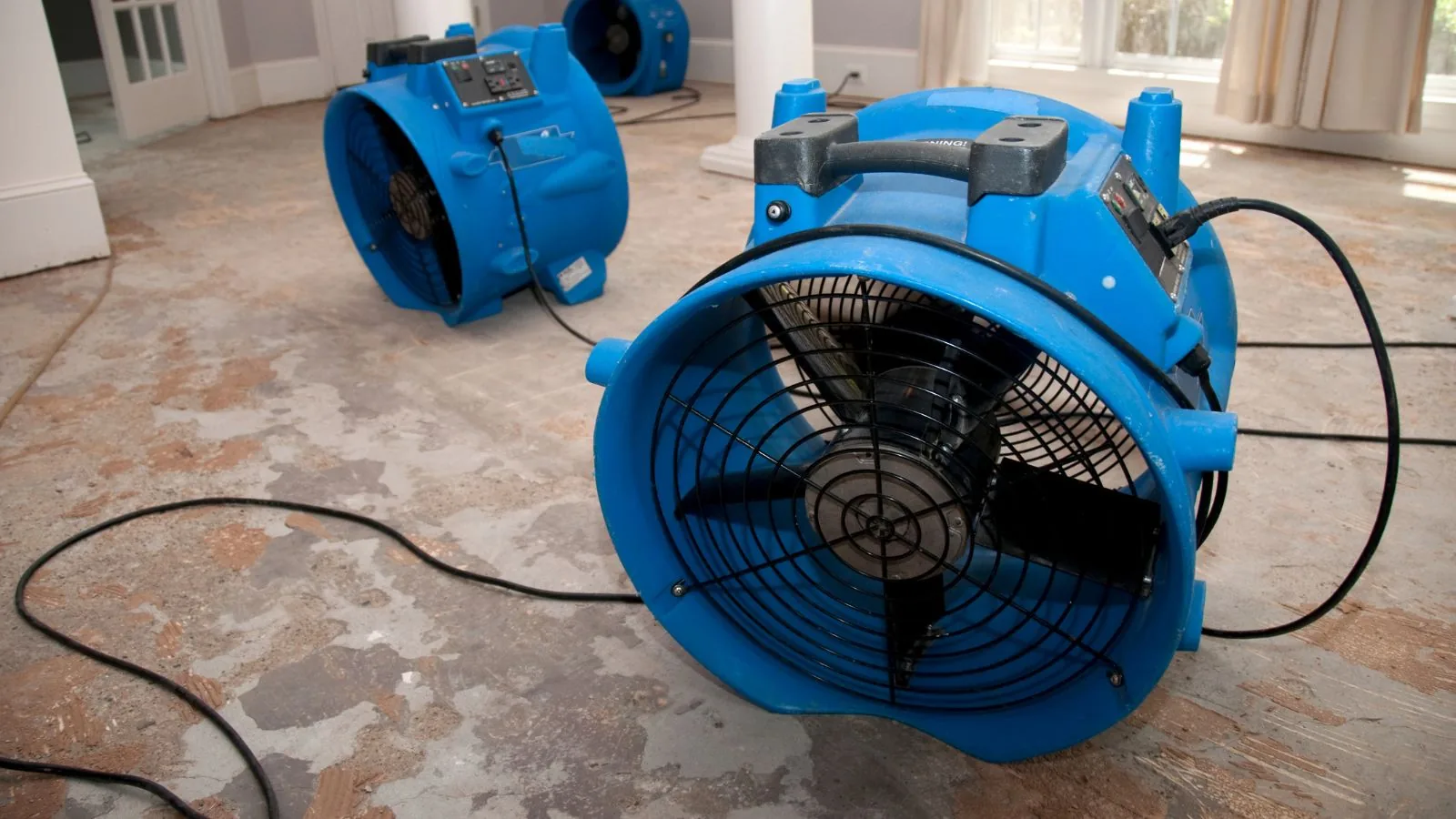
Water-damaged carpet is carpet that has been soaked by a leak, overflow or flood. Whether it can be saved depends on three things: what kind of water it was, how long it sat, and what is under it. Clean water caught within a day often allows the carpet to be dried in place. Dirty water or days of waiting usually does not.
Carpet water damage restoration includes extracting the water, lifting and drying the carpet or replacing it, handling the pad, and drying the subfloor. It is a different problem from wood flooring, which has its own page, hardwood floor water damage repair.
Symptoms of water-damaged carpet
Carpet that squishes underfoot is the obvious sign. Others are less obvious: a musty smell, edges that lift from the tack strip, browning along walls, rippling or stretching, and baseboards that feel damp. Pad holds water far longer than the carpet fibers do, so carpet can feel almost dry while the layer under it is still wet.
- Squishy or cold-feeling carpet in one spot or across a room.
- A sour or musty smell that returns after drying the surface.
- Ripples, wrinkles or lifted corners near the wall.
- Dark spots along the baseboard or the edge of the carpet.
- Stains on the ceiling below, when carpet is upstairs.
Can the carpet and pad be saved?
The deciding factor is the water category under ANSI/IICRC S500. Clean supply-line water, caught quickly, usually allows the carpet to be extracted and dried in place, with the pad replaced if it is saturated. Category 2 water, such as washing machine overflow, often means the pad comes out and the carpet is cleaned or replaced. Category 3 water, from sewage or flood, normally means carpet and pad are removed.
| Situation | Usual result for carpet | Usual result for pad |
|---|---|---|
| Clean water, caught within a day | Extracted and dried in place | Often replaced, sometimes dried |
| Clean water, left for several days | May be dried but at risk of odor and delamination | Removed |
| Gray water such as appliance overflow | Cleaned and dried, or replaced | Removed |
| Sewage or flood water | Removed | Removed |
How the work goes
- Check the source and photograph the carpet and baseboards.
- Extract water from the surface with an extraction wand.
- Lift the carpet from the tack strip at the corner, check the pad and subfloor, and remove pad that cannot be saved.
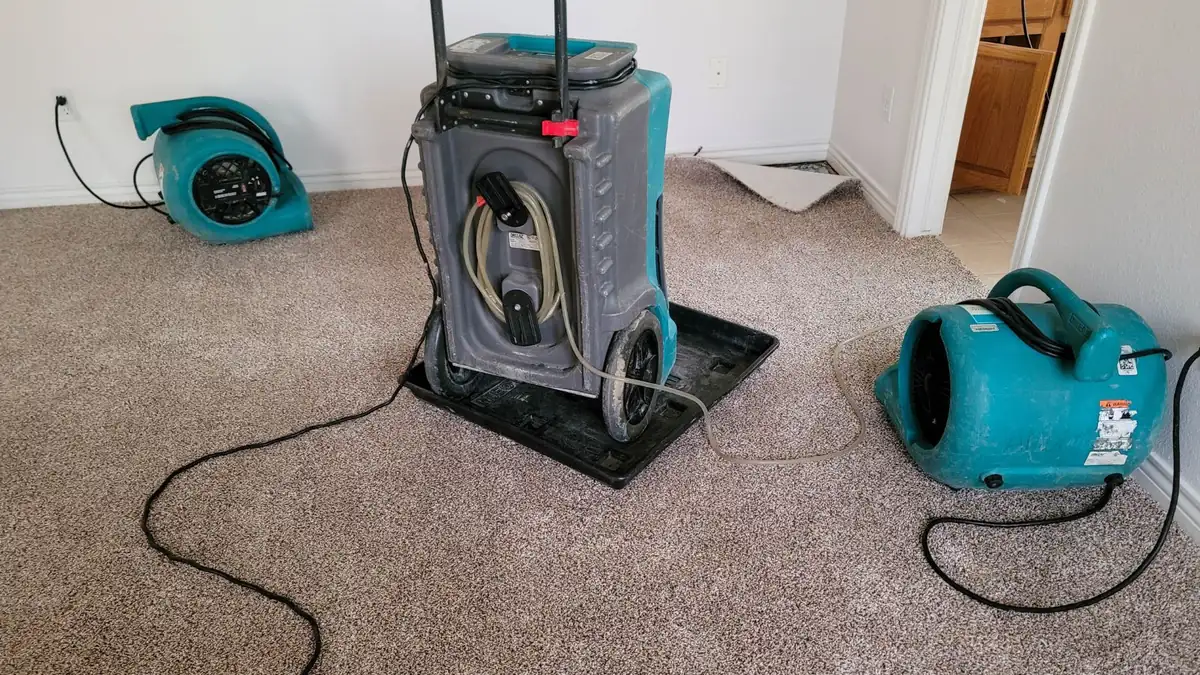
- Dry the carpet, usually lifted and supported on a floating system, along with the subfloor, with air movers and dehumidifiers.
- Clean and deodorize, then reinstall or replace.
- Verify subfloor moisture before new pad and carpet are laid.
The second step is the one that matters most for a quick result. See water extraction for how standing water is removed, and structural drying for how the subfloor and wall bottoms are dried.
Mold and odor risk in wet carpet
Wet pad and subfloor stay damp for a long time, which is where odor and mold trouble start. The earlier the carpet is lifted and the pad is removed, the less chance there is for moisture to stay trapped. If you already see dark spots or smell a persistent musty odor, the mold remediation page explains what testing and containment involve. Health concerns belong with a physician.
Carpet damage in Hendersonville homes
Carpet shows up in bedrooms, basements and living rooms alike, and the room it is in affects the answer. Upstairs carpet usually gets wet from a supply line, tub or appliance, and often drips into the ceiling below. Basement carpet is often wet from seepage, a sump failure or a drain issue. Ask your insurer how your policy treats the cause, and call the same 24/7 line from ZIP 37075 or 37077.
What to do before help arrives
- Keep off wet carpet near outlets, cords and appliances.
- Do not use a household vacuum on standing water.
- Lift furniture legs onto foil or blocks to prevent stains.
- Open interior doors and run a fan if the area is clean and dry.
- Photograph wet areas and the source before anything is moved.
What affects the cost of carpet water damage work
Carpet jobs are small or large depending on whether the carpet can be dried or must be replaced.
| Cost factor | Why it changes the job |
|---|---|
| Water category | Clean water allows drying in place, dirty water requires removal. |
| Time since the water | Every day increases the chance that pad and subfloor need replacement. |
| Room size | More square footage needs more equipment or more material. |
| Carpet and pad quality | Higher-grade carpet is worth drying, while low-cost carpet may be cheaper to replace. |
| Subfloor condition | Wet plywood or concrete needs drying before new pad goes down. |
| Reinstall or replace | Restretching or new carpet is separate from the cleanup. |
Describe the damage on the phone and the dispatcher explains the likely scope and price before any work starts.
Related guides
- Musty Smell After Water Damage: Hendersonville, TN Guide
- Wet Mattress or Sofa After a Leak: Hendersonville, TN Guide
Questions about carpet water damage in Hendersonville
How soon do I need to act on wet carpet?
Within a day if possible. Clean-water carpet often dries well if the water is extracted that day, but the chances drop as time passes.
Is it worth saving old carpet?
Sometimes drying costs more than replacement, especially for older or lower-grade carpet. The dispatcher or crew can talk through the trade-offs with you.
Does the pad always have to be replaced?
Not always, but often. Pad holds water longer than carpet and is cheap to replace compared with the risk of odor from wet pad left in place.
Can wet carpet cause mold?
Wet carpet and pad can support mold if they stay damp, which is why drying fast matters. Health questions go to a physician, not to a restoration crew.