
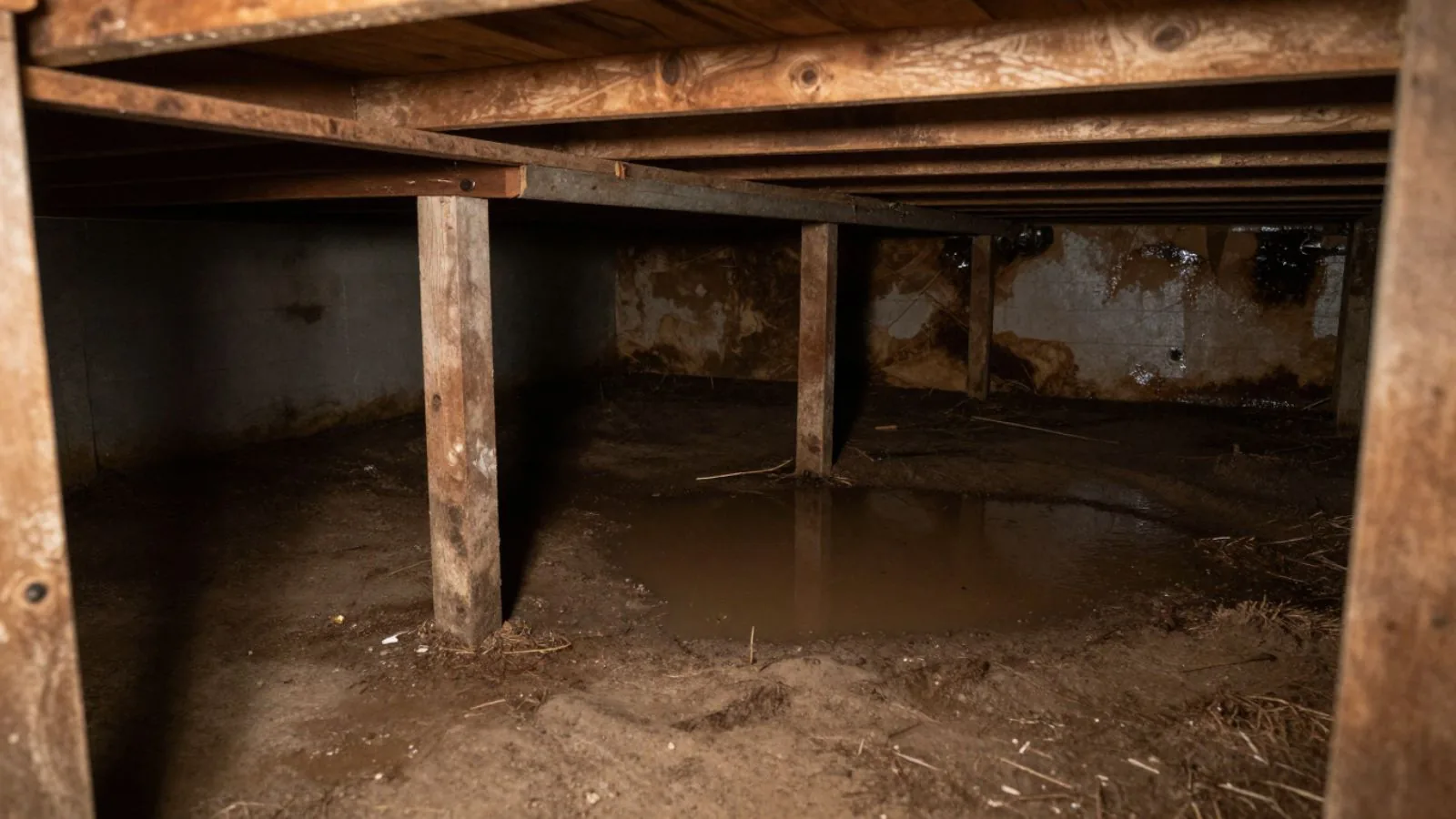
Crawl space water damage cleanup is the removal of standing water, wet insulation and damp debris from the space under a raised floor, followed by drying of joists, subfloor and the vapor barrier. The space is low, dark and hard to reach, so problems often go unnoticed until floors soften or odors rise.
Crawl spaces are not basements. They hold ductwork, pipes and insulation but no living space. Water in a crawl space comes from rain, groundwater, plumbing leaks and poor drainage, and the fix depends on which of those it is.
Signs of a wet crawl space
Most people find out through the house, not the crawl space. A musty smell in the living area, floors that feel soft, a cold floor in winter, doors that stick and condensation on ductwork are all hints. A flashlight look through the access door often shows more.
- Standing water, mud or wet soil under the home.
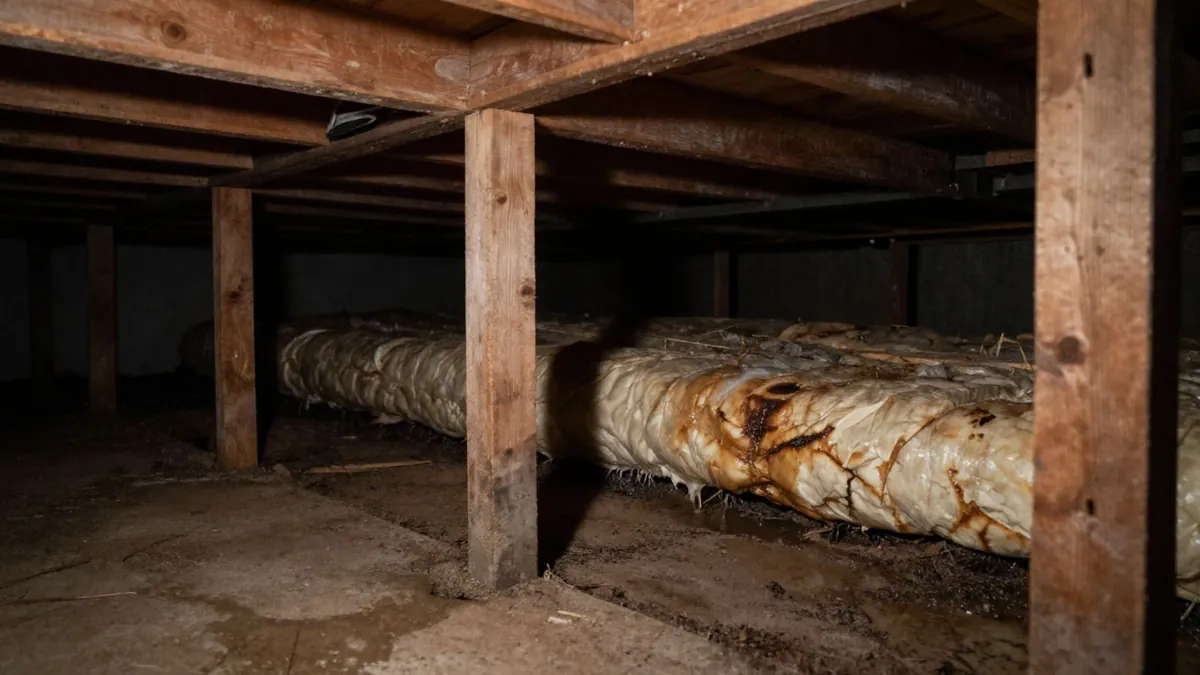
- Insulation that sags or has fallen from between joists.
- Dark staining or fuzzy growth on joists or the subfloor.
- Pooling water around the foundation vents after heavy rain.
- Rusting on ducts or hangers.
- A plumbing drip visible at a joint or fitting.
Where the water comes from
There are four common sources. Surface water from rain that runs toward the foundation. Groundwater that seeps through the soil. A plumbing leak, such as a supply line or drain, covered on the burst pipe page. And humid air that condenses on cool surfaces. Each has a different fix, and cleanup should not be treated as a cure for the source.
The cleanup crew can tell you what they see, but fixing drainage or adding a vapor barrier is a construction or waterproofing job handled by a different trade.
How crawl space cleanup works
- Check safety, including electrical equipment, ductwork and access.
- Extract standing water with a small pump and wet vacuum.
- Remove wet insulation, loose debris and wet vapor barrier material that cannot be dried.
- Treat and clean joists and subfloor surfaces.
- Dry the space with dehumidifiers, with desiccant units in cool conditions, and air movers.
- Check moisture readings in joists and subfloor, then replace insulation and vapor barrier as needed.
Drying is the longest part, and the structural drying page explains the equipment in more detail.
Effects on the floor above
Wet joists and subfloor can swell, soften and eventually rot, and the flooring above can cup or stain. If your wood floors are changing shape, the hardwood floor page explains what can be saved. If the finished room below grade is a basement instead, the basement page is the better match.
Crawl space notes for Hendersonville homes
Not every Hendersonville home has a crawl space, and how common they are in a given neighborhood is not something to assume. If your house has one, a quick look at the access panel or a call to a contractor will tell you. Check the FEMA flood map for your address and ask the city Building and Codes office about permits for any structural repair. Dispatch covers ZIP 37075 and 37077.
What to do before help arrives
- Do not enter a flooded crawl space, since water, wiring and tight spaces are a poor mix.
- If the circuit serving the crawl space can be reached safely, shut it off.
- Do not run fans or heaters into standing water.
- Photograph from the access opening and note how high the water reaches.
- Stop any known water source, such as a leaking supply line.
Industry standard
ANSI/IICRC S500 covers how professionals assess and dry a structure, and a crawl space is part of that structure. Ask whether the crew will take moisture readings in the framing and subfloor, not only on the soil surface.
What affects the cost of crawl space cleanup
Crawl space jobs depend heavily on access and on what is down there.
| Cost factor | Why it changes the job |
|---|---|
| Access and height | Tight crawl spaces slow every task and may need smaller equipment. |
| Amount of water | Standing water takes extraction, while dampness takes drying. |
| Insulation and vapor barrier | Wet insulation and torn plastic must be removed and replaced. |
| Joist and subfloor moisture | Wet wood needs longer drying. |
| Source repair | Drainage, plumbing and waterproofing are priced separately. |
| Debris and odor | Cleaning and deodorizing add time. |
Call and describe what happened. The dispatcher lays out the likely scope and the price drivers before anyone starts work.
Related guides
- Musty Smell After Water Damage: Hendersonville, TN Guide
- How Fast Mold Grows After Water Damage in Hendersonville, TN
Questions about crawl space water damage in Hendersonville
Is a wet crawl space an emergency?
Standing water or an active plumbing leak is urgent. Dampness without active water can usually wait for a scheduled visit, but should not wait weeks.
Can you waterproof the crawl space?
Cleanup and drying are restoration work. Waterproofing is a different trade, and a crew can tell you what they saw so you can ask a waterproofing contractor.
Will wet insulation have to be replaced?
Usually yes. Wet fiberglass or foam often sags and does not dry quickly, and it holds moisture against the wood.
How long does crawl space drying take?
It depends on how wet the wood is and how humid the air is. The crew uses moisture readings to decide when it is dry.